

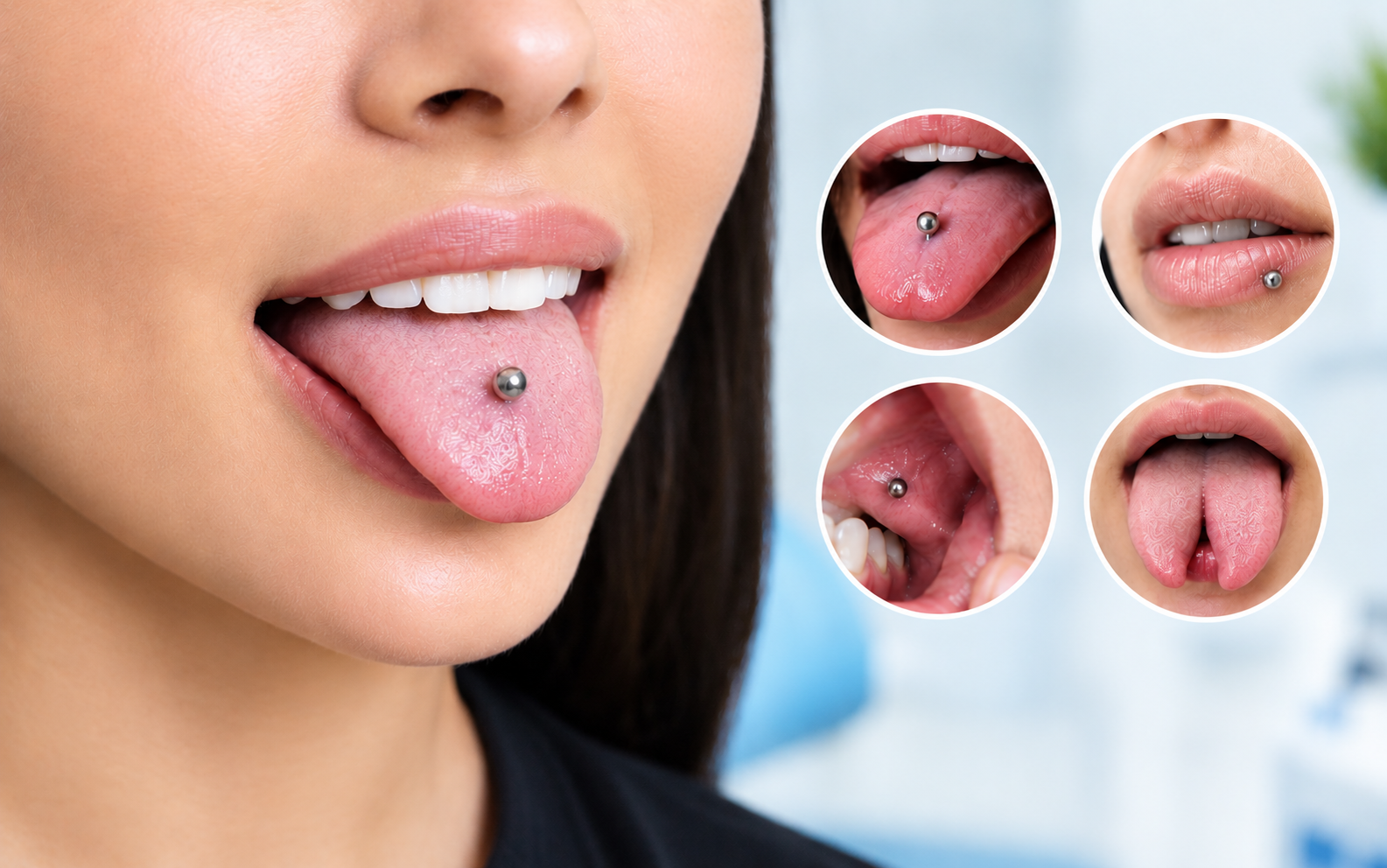
Oral piercings, including tongue, lip and cheek piercings, are popular among adolescents and young adults as a form of self-expression. While they may look harmless, placing jewellery through the tissues of the mouth can come with several oral health risks.
SEE ALSO: The Fad of Tongue Piercing & Splitting
So, can oral piercings cause infections? The answer is yes. Piercing creates an opening in the skin or oral tissues, giving bacteria an opportunity to enter. There are also other potential complications, including swelling, gum damage, chipped or cracked teeth, and problems with speaking, chewing or swallowing.
If you are considering an oral piercing, understanding the risks can help you make a more informed decision.
Can oral piercings cause infections?
Any procedure that breaks the skin or mucous membrane carries a risk of infection. This is particularly important with oral piercings because the mouth naturally contains millions of bacteria.
Tongue, lip, cheek and other oral piercings can therefore become infected if bacteria enter the piercing site. Lip piercings can be particularly challenging because the jewellery may come into contact with both the inside and outside of the mouth.
The good news is that oral tissues generally heal relatively quickly because they have a rich blood supply. However, good healing does not eliminate the risk of infection. Poor oral hygiene, touching the piercing with unclean hands, smoking and inadequate aftercare can all increase the risk.
There is also a risk of blood-borne infections if the piercing is performed using improperly sterilised equipment. Choosing a reputable professional who follows strict hygiene and sterilisation procedures is essential.
What are the risks of tongue, lip and cheek piercings?
Infection is not the only concern associated with oral piercings. The jewellery itself can repeatedly come into contact with the teeth, gums and other oral tissues.
Potential complications include:
- Swelling and inflammation
- Pain or tenderness around the piercing
- Damage to the gums
- Gum recession
- Chipped, cracked or fractured teeth
- Tooth wear from repeated contact with jewellery
- Damage to fillings or other dental restorations
- Difficulty speaking, chewing or swallowing
- Soft tissue trauma
Tongue piercings can be particularly problematic because the jewellery moves around the mouth and may repeatedly strike against the teeth. Even if there is no immediate problem, repeated trauma over time can contribute to dental damage.
Can tongue piercings damage your teeth and gums?
Yes. One of the biggest long-term concerns with tongue piercings is repeated contact between the jewellery and the teeth or gums.
The jewellery is usually made from a hard material and sits in an area where the tongue is constantly moving. Biting down on the jewellery or repeatedly hitting it against the teeth can lead to chips, cracks and tooth wear.
The jewellery can also rub against the gums. Over time, this may contribute to gum irritation or recession, particularly if the piercing repeatedly contacts the same area.
Unlike a temporary injury, damage to tooth structure or receding gums may require dental treatment. This is why anyone with an oral piercing should pay attention to changes in their teeth and gums and maintain regular dental check-ups.
What is tongue splitting and is it safe?
Tongue splitting is a body modification procedure that involves dividing the tongue into two sections, creating a split or forked appearance.
It is different from a conventional tongue piercing, but it can involve significant trauma to the tongue and carries its own risks. These may include bleeding, infection, swelling, nerve damage, scarring and problems with tongue movement or function.
Because the tongue contains a rich network of blood vessels and nerves, an injury to the area can potentially be serious. Complications may also affect speaking, eating or swallowing.
People searching for a tongue splitting procedure may come across different techniques or instructions online. However, attempting to perform tongue splitting yourself, or having it performed in an environment that does not follow appropriate medical and hygiene standards, can expose you to serious complications.
If you are considering any form of oral body modification, it is important to understand the potential risks rather than relying solely on online instructions or trends.
How can you reduce the risk of infection from an oral piercing?
If you already have an oral piercing, good oral hygiene and careful aftercare are important for supporting healing.
You should:
- Keep the piercing area clean.
- Wash your hands before touching the jewellery.
- Rinse your mouth as recommended after eating.
- Follow the aftercare instructions provided by the professional who performed the piercing.
- Avoid smoking while the area is healing.
- Avoid unnecessarily touching, twisting or playing with the jewellery.
- Maintain your regular brushing and flossing routine.
It is also a good idea to have a dental check-up before getting an oral piercing, particularly if your oral hygiene is poor or you already have gum disease, tooth decay or other dental problems. Addressing existing oral health issues first may help reduce complications.
When should you see a dentist or doctor?
Some swelling and tenderness can occur after a piercing or a tongue splitting but certain symptoms should not be ignored.
Seek professional medical attention if you develop increasing pain, significant swelling, redness, pus or discharge, fever or chills. Severe swelling of the tongue is particularly concerning because it can interfere with breathing or swallowing and may require urgent medical attention.
You should also see your dentist if you notice a chipped or cracked tooth, increasing tooth sensitivity, gum recession or persistent irritation around the piercing.
If an infection develops, early treatment can help prevent it from becoming more serious. Depending on the situation, treatment may involve cleaning the area, medication and, in some cases, removing the jewellery to allow the tissues to heal.
Should you get an oral piercing?
Oral piercings may be a form of self-expression, but they are not without risks. Infection, gum damage and dental trauma are all possible, particularly when jewellery repeatedly encounters the teeth and surrounding tissues.
If you are considering an oral piercing, make sure you understand the potential complications and choose a professional who follows appropriate hygiene and sterilisation procedures. A dental check-up before and after the procedure can also help identify any developing problems early.
If you have an oral piercing and are concerned about your teeth, gums or healing, speak to a dentist at Dr. Michael’s Dental Clinic for an assessment and personalised advice.
